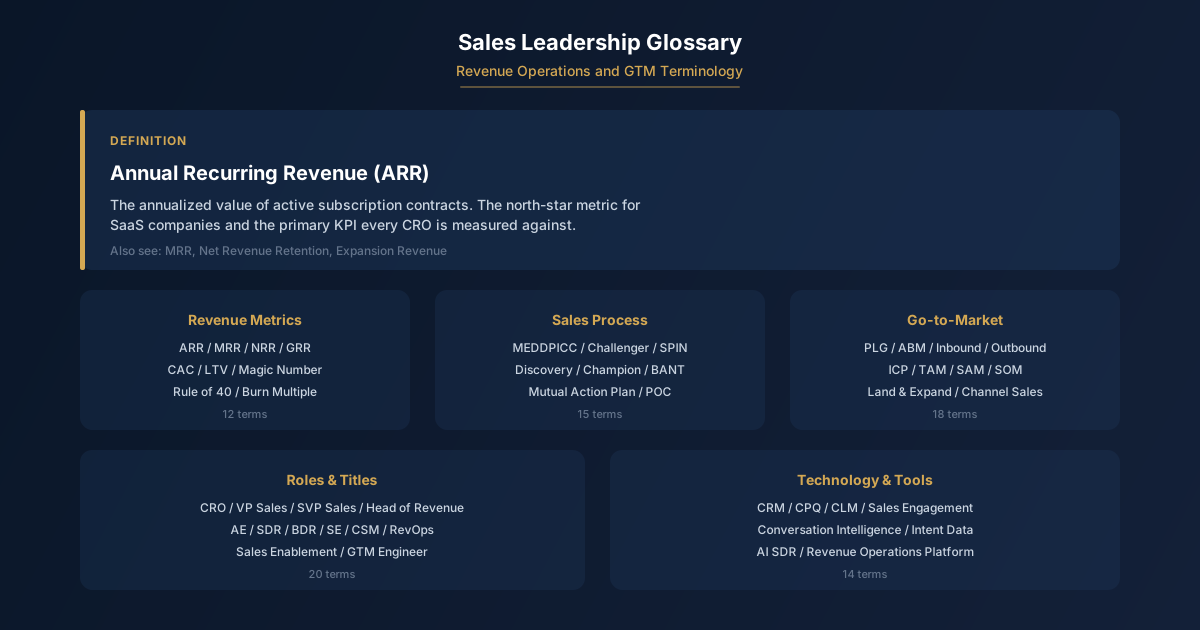
A champion is an internal advocate within the buying organization who has influence, access to the economic buyer, and a personal stake in your solution winning.
In enterprise sales, a champion is the person inside the prospect's company who sells on your behalf when you're not in the room. They're different from a coach or contact. A true champion has three qualities: power or influence, access to decision makers, and something personal to gain from your solution succeeding.
Champion vs Coach vs Contact
Not every friendly face is a champion. A contact answers your calls but can't influence the deal. A coach gives you information about the buying process but lacks organizational power. A champion actively sells internally, shares competitive intel, and coaches you on how to win. The MEDDPICC framework tests for champions specifically because deals without one close at drastically lower rates.
Testing Your Champion
The fastest way to test a champion: ask them to do something that requires effort. Can they get you a meeting with the economic buyer? Will they share the internal evaluation criteria? Do they push back on competitors in internal meetings? If the answer to all three is no, you have a coach, not a champion. Great reps test early and often rather than discovering the gap at the end of a 6-month sales cycle.
Building Champions
Champions aren't found. They're built. Help them look good internally by providing business cases, ROI models, and executive summaries they can present. Make their job easy. The best champions emerge when your solution solves a problem that's personally tied to their performance review or promotion. Find that connection and you'll find your champion.
Common Mistakes with Champions
Confusing access with influence. Your contact who takes every meeting and answers every email might have zero organizational power. They're happy to help because the project is interesting, but when it comes time to push for budget or override a competitor preference, they can't move the needle. Test early. Ask them to get you 15 minutes with the VP or C-level sponsor. If they can't or won't, you don't have a champion. You have a friendly contact who will be just as friendly when they tell you they went with the other vendor.
Real-World Example
A rep at a security software company spent 5 months working a $200K deal with a 'champion' who was a senior engineer. The engineer loved the product, gave enthusiastic references in internal meetings, and provided competitive intel. But when the CTO chose a competitor, the engineer couldn't influence the decision. He didn't have budget authority or political capital. The VP Sales reviewed the deal postmortem and identified the gap: the rep never tested the champion by asking him to arrange a direct meeting with the CTO. That single test would have revealed the gap in month 2, not month 5.
In Practice
The best framework for evaluating champion strength uses three tests. First, the access test: can they get you a meeting with the economic buyer within two weeks? Second, the effort test: will they review and present your business case to their leadership team? Third, the intel test: do they share competitive information, internal objections, and evaluation criteria without you having to ask? A true champion passes all three. A coach passes one or two. A contact passes zero. Score your champions on these three dimensions in every deal review and you'll stop being surprised by late-stage losses.