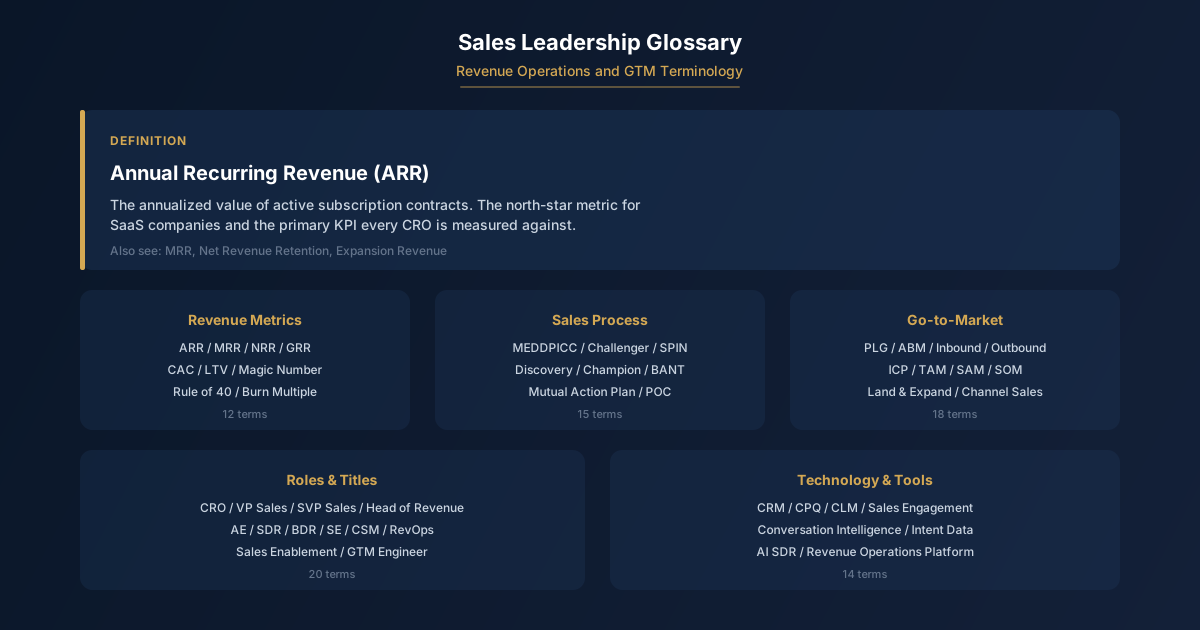
Intent data consists of behavioral signals that indicate a company or individual is actively researching solutions in your category, enabling sales teams to prioritize accounts showing buying readiness.
Intent data tracks online research behavior across the web, from content consumption patterns to specific keyword searches, to identify companies in an active buying cycle. It's the difference between cold-calling a prospect who's never heard of you and reaching out to one who downloaded three competitor whitepapers last week.
Types of Intent Data
There are two main categories. First-party intent data comes from your own properties: website visits, content downloads, pricing page views, and product usage (for PLG companies). Third-party intent data comes from external sources like Bombora, G2, TrustRadius, and 6sense, which track content consumption across thousands of B2B websites. Third-party intent tells you who's researching your category even if they've never visited your site.
How Sales Teams Use Intent Data
Intent data powers account prioritization. Instead of working a static list alphabetically, reps focus on accounts showing surge activity (a spike in research on relevant topics). SDRs use intent signals to time their outreach. AEs use it to re-engage stalled deals when a prospect starts researching again. The best sales orgs combine intent data with firmographic data to create a prioritized target account list that updates weekly.
Intent Data Providers and Tools
Major intent data providers include Bombora (the largest B2B intent network), 6sense and Demandbase (which layer intent with ABM orchestration), G2 and TrustRadius (category-specific buyer intent from review sites), and ZoomInfo (which combines contact data with intent signals). CROs evaluating intent providers should ask about data freshness, signal accuracy, and integration with their existing CRM and sales engagement tools.
Common Mistakes with Intent Data
Treating all intent signals as equal. A company researching 'CRM software' isn't necessarily buying. They might be writing a blog post, doing competitive analysis, or filling out a college assignment. High-value intent signals are specific: comparing two vendors by name, reading pricing pages, searching for implementation timelines. CROs should work with their data team to define which topic clusters correlate with buying behavior and ignore the noise.
Real-World Example
A B2B software company purchased intent data from Bombora and immediately sent all 'surging' accounts to the SDR team. Volume exploded: 500 accounts per week flagged as showing intent. Meeting booking rates: 2%. The VP Sales segmented the data: accounts surging on their specific product category converted at 8%. Accounts surging on broad industry topics converted at 0.5%. They filtered the feed to only include category-specific intent and combined it with firmographic fit scoring. Meeting rates jumped to 12% and pipeline quality improved significantly.
In Practice
The highest-performing intent data implementations follow a three-layer approach. Layer 1: firmographic fit (does this company match our ICP by size, industry, and tech stack?). Layer 2: behavioral intent (is this company actively researching our category?). Layer 3: engagement signals (has anyone at this company interacted with our content, website, or community?). Accounts that score high on all three layers are Tier 1 targets and get immediate SDR outreach plus AE involvement. Accounts hitting only Layer 1 + 2 go into targeted nurture campaigns. This tiered approach prevents the most common intent data failure: treating all surging accounts the same regardless of fit.