
6sense vs Demandbase: ABM Platform Comparison (2026)
6sense vs Demandbase compared for ABM. Intent data, account identification, advertising, pricing, and integration depth. Which platform fits your team.
If you're evaluating enterprise ABM platforms, the shortlist starts with 6sense and Demandbase. They're the two dominant players, and every other vendor in the category defines itself relative to them. But they solve the same problem from different angles, and the right choice depends on what you prioritize: predictive intent scoring or advertising and engagement orchestration.
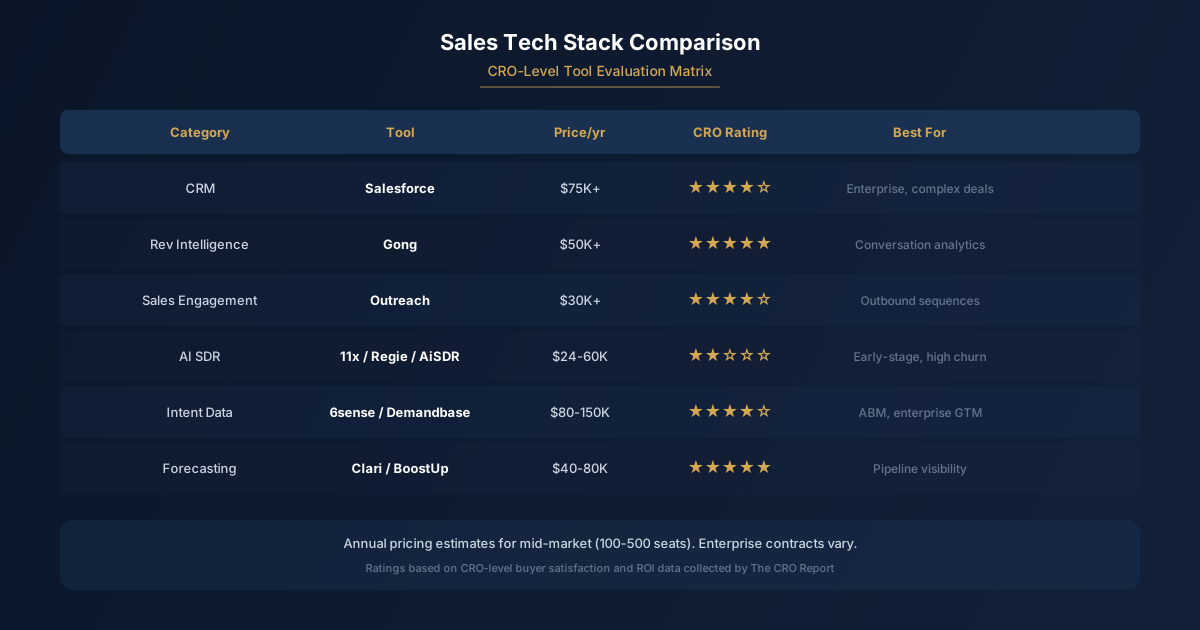
6sense leads with intent data and predictive scoring. Its AI models identify which accounts are in-market before they fill out a form. Demandbase leads with account-based advertising and engagement data. It shows you which accounts are engaging across your website, ads, and content, then lets you orchestrate campaigns against them. Both cost $50K+ annually for meaningful deployments. The overlap is real, but the DNA is different.
How We Picked These
This comparison is based on product evaluations, feedback from revenue leaders who've used both platforms, and analysis of competitive win/loss data. We assess intent data accuracy, advertising capabilities, CRM integration depth, and total cost of ownership.
Our Picks
6sense's intent data network is its primary advantage. It tracks anonymous buying signals across the web, matches them to accounts, and scores accounts by purchase readiness. The AI predictions tell you which accounts are in-market this quarter, not just which accounts match your ICP. For sales teams, the "Revenue AI" engine prioritizes outreach to accounts most likely to buy. 6sense also identifies anonymous website visitors at the account level, connecting web traffic to target account activity.
Demandbase built its reputation on account-based advertising before expanding into the broader ABM platform. Its ad targeting lets you serve display, LinkedIn, and programmatic ads to specific accounts and buying groups. The engagement data captures how accounts interact with your website, ads, and content across channels. For marketing teams running ABM campaigns, the advertising capabilities are stronger than 6sense's. Demandbase's account identification also matches 6sense's quality for website visitor data.
Read Full Review →Frequently Asked Questions
Which is better, 6sense or Demandbase?
It depends on your primary ABM motion. 6sense is stronger for intent data and predictive account scoring. Sales teams that want to know which accounts are actively researching solutions prefer 6sense. Demandbase is stronger for account-based advertising and multi-channel campaign orchestration. Marketing teams running coordinated ABM campaigns across display, LinkedIn, and content prefer Demandbase.
How much do 6sense and Demandbase cost?
Both are enterprise-priced. 6sense typically starts at $50K/year and scales to $200K+ for large deployments. Demandbase starts around $40K/year and scales similarly. Both require annual contracts. Add implementation, training, and CRM integration costs on top. Neither publishes pricing. Budget $60K-100K for a meaningful first-year deployment with either platform.
Can I use both 6sense and Demandbase?
Some large enterprises do, using 6sense for intent-based sales prioritization and Demandbase for advertising. But the overlap is significant, and running both doubles your ABM platform spend. Most teams pick one and supplement with point solutions (like Bombora for additional intent data or LinkedIn Ads Manager for advertising).
Are there cheaper alternatives to 6sense and Demandbase?
RollWorks starts under $1K/month and offers basic ABM advertising and targeting. HubSpot includes ABM features in its Marketing Hub. Terminus (now DemandScience) serves the mid-market. None match 6sense or Demandbase on intent data depth, but they cover 60-70% of ABM needs at 20-30% of the price.
Get Weekly Tool Intel
We track GTM tool changes, pricing updates, and new entrants so you don't have to.
Subscribe to The CRO Report →