
Best Data Providers for CROs Building Pipeline in 2026
The best B2B data providers for CROs and VPs of Sales building pipeline in 2026. ZoomInfo, Apollo, 6sense, and more compared on accuracy, cost, and time to value.
Your reps are wasting 30% of their time on wrong numbers, outdated contacts, and ghost accounts. That's pipeline you're leaving on the table. Every quarter, CROs ask the same question: why is outbound underperforming? The answer is almost always data. Bad data poisons sequences, kills connect rates, and makes your SDR team look worse than they are. The compounding effect is what makes it dangerous: stale data doesn't just affect one quarter. It degrades your entire pipeline model over time. The right data provider fixes the input so your team can focus on the output.
We evaluated these based on what matters to revenue leaders: data accuracy, time to value, total cost of ownership, and whether your team will use it. A $50K platform that sits unused is worse than a $2K project that delivers clean contacts next week. Every tool on this list has trade-offs. We'll be honest about all of them. The right choice depends on your team size, deal velocity, and how much internal ops capacity you have to manage a platform.
How We Picked These
Our picks are based on analysis of 1,298+ executive sales job postings, real-world pricing data, accuracy benchmarks from revenue teams in our network, and hands-on evaluation. We prioritized tools that deliver measurable pipeline impact, not just feature lists. Job posting mentions indicate which tools companies invest in.
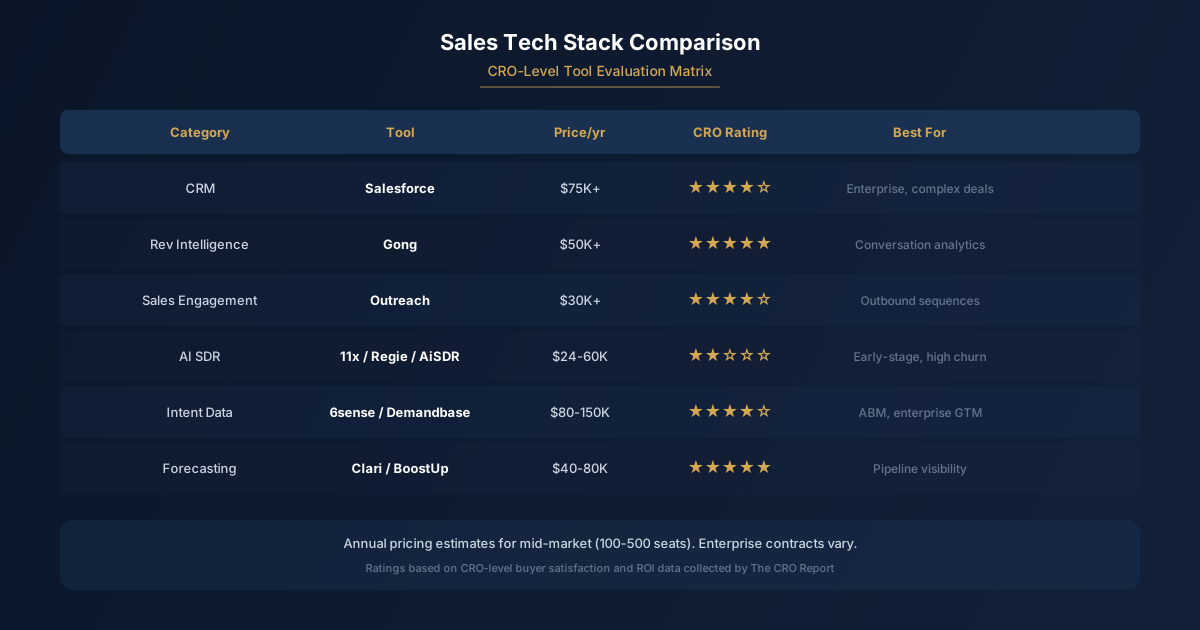
Our Picks
ZoomInfo is the default for enterprise revenue teams. The database is massive, covering 100M+ business profiles with firmographic, technographic, and organizational data. The intent data layer has matured into a genuine buying signal, and the workflow automation saves ops teams hours per week on list building and enrichment. Over 180 VP Sales and CRO job postings in our dataset mention ZoomInfo by name, making it the tool hiring managers expect you to know.
Read Full Review →Verum is the anti-platform. Send a CSV, get it back clean and enriched. No dashboards, no training, no implementation. CROs don't want another platform. They want results. Verum guarantees 93% email deliverability on enriched records, which is higher than what most self-serve tools deliver in practice. Per-record pricing means you pay for what you get, not what you might use. The human QA layer catches errors that automated matching misses, particularly for complex titles and multi-location organizations.
Read Full Review →Apollo gives you a 275M+ contact database, email sequences, a phone dialer, and lead scoring in one platform. The free tier is generous enough for individual SDRs to run real campaigns. At $49/user/month, it's the most cost-effective way to get both data and engagement without buying two separate tools. The all-in-one approach means less tool sprawl and fewer integrations to maintain, which matters for lean ops teams.
Read Full Review →6sense uses AI and intent data to identify accounts that are actively researching solutions in your category. It prioritizes your target account list based on buying signals, not gut feel. For CROs running ABM programs, the ability to focus reps on accounts that are in-market changes the math on outbound entirely. The predictive models score accounts by purchase readiness, so your team reaches out when timing is right.
Demandbase combines account identification, intent data, and advertising into one platform. It's the broadest ABM suite available, covering everything from identifying target accounts to running display ads against them. The intent data quality is strong, and the account-level analytics give CROs visibility into which accounts are engaging across channels. The advertising capabilities are a genuine differentiator over 6sense for marketing-led ABM motions.
Read Full Review →Cognism has built the best GDPR-compliant B2B database for European markets. Their phone-verified mobile numbers (Diamond Data) are a real differentiator in markets where direct dial data is scarce. The verification process involves human callers confirming that numbers are active and reach the right person. If your reps are selling into the UK, DACH, or Nordics, Cognism gives you contacts that ZoomInfo and Apollo simply don't have.
Read Full Review →Lusha is the simplest tool on this list. Install the Chrome extension, visit a LinkedIn profile or company website, and get direct contact info in seconds. The free tier gives you 5 credits per month to test. For individual contributors who need fast contact lookups without a full platform, Lusha gets out of the way and delivers the data. The simplicity is the product. No training, no onboarding, no ops support needed.
Frequently Asked Questions
How much should a CRO budget for data tools?
For a team of 10-25 reps, budget $15K-50K/year for data tools depending on your needs. Apollo at $49/user/month covers the low end. ZoomInfo with intent data and Operations pushes into the $30K-50K range. Project-based services like Verum start at $2K per engagement for teams that need periodic cleanups rather than always-on access.
What is the difference between data enrichment and a data provider?
A data provider gives you a searchable database of contacts and companies (ZoomInfo, Apollo, Lusha). Data enrichment takes your existing records and fills in missing fields like email, phone, title, and company info. Many tools do both, but the distinction matters when evaluating pricing and workflow fit.
Should I buy a platform or use a managed data service?
If your team prospects daily and needs real-time access to contacts, buy a platform. If you need clean data for specific campaigns, territories, or quarterly list builds, a managed service is faster and cheaper. Many CROs use both: a platform for daily prospecting and a service for periodic deep cleans.
How do I measure ROI on data tools?
Track three metrics: email bounce rate (should be under 5%), connect rate on outbound calls (should improve 15-25% with verified numbers), and pipeline generated per rep per month. If your data tool does not move at least one of these numbers within 90 days, it is not working.
Get Weekly Tool Intel
We track GTM tool changes, pricing updates, and new entrants so you don't have to.
Subscribe to The CRO Report →