
Head-to-Head Comparison
These platforms have different primary jobs. The comparison only makes sense in that context.
| Category | Clari | Gong | Edge |
|---|---|---|---|
| Primary Job | Revenue forecasting, pipeline inspection | Conversation intelligence, rep coaching | Different |
| Forecast Accuracy | AI-driven call predictions, scenario modeling, commit vs best-case views | Deal risk signals from conversation data; basic forecast views | Clari |
| Call Intelligence | Limited; Clari has added some conversation capture but it's not the core | Category leader; transcription, topic tracking, competitor mentions, coaching cards | Gong |
| Rep Coaching | Activity-based coaching recommendations | Call-level coaching with specific moments, talk-time ratios, objection handling | Gong |
| Pipeline Inspection | Best-in-class; deal-by-deal AI risk scoring, historical comparison, velocity | Deal boards and risk flags; improving but not Clari's depth | Clari |
| CRM Hygiene | Strong; auto-captures activity data back to CRM fields | Good; auto-logs calls and emails, updates fields from conversation data | Clari |
| Pricing (typical) | $60-100/user/mo; custom quotes | $100-200/user/mo; custom quotes | Clari |
| G2 Rating | 4.6/5 (5,200+ reviews) | 4.7/5 (5,900+ reviews) | Gong (slight) |
| Best Stage | Series B and beyond; $20M+ ARR | Series A and beyond; $5M+ ARR | Gong (earlier) |
What Each Platform Actually Does
Stripped of marketing language.
Clari: The Forecast Machine
Clari ingests CRM data, email activity, calendar data, and conversation signals to produce AI-driven revenue forecasts. Its core output is a prediction: how much revenue will close this quarter, at what confidence level, and which deals are at risk of slipping.
Managers use it to run deal reviews without fishing through Salesforce. CROs use it to prepare board materials without spending a Sunday manually rolling up manager forecasts.
The platform tracks deal velocity, engagement levels, and historical patterns to flag deals that look like they're stalling before the rep admits it.
Gong: The Call Intelligence Platform
Gong records, transcribes, and analyzes every customer conversation. It identifies when competitors get mentioned, which objections come up most often, how much your rep talks vs. the prospect, and whether next steps were actually committed to.
Managers use it to coach without attending every call. Reps use it to review their own conversations and find patterns in what's working.
It also surfaces deal risk from what was said, not just from CRM activity. A deal where the prospect mentioned a competitor four times in the last call is a very different signal than CRM notes saying "evaluating alternatives."
When to Buy Each (by ARR Stage)
The right answer changes as your business grows.
| Stage | Recommendation | Reason |
|---|---|---|
| $0-10M ARR | Gong only | Rep coaching ROI is immediate. Forecast accuracy matters less when you have 3 reps and the founder knows every deal. |
| $10-30M ARR | Gong first | You now have 8-20 reps. Coaching quality drives quota attainment. Clari's forecast value grows but isn't urgent yet. |
| $30-75M ARR | Both; Gong first | Board-level forecast accuracy starts mattering. Pipeline complexity grows. This is the zone where Clari earns its cost alongside Gong. |
| $75M+ ARR | Both required | You can't run a reliable revenue org at this scale without both. The manual overhead of replacing either platform exceeds the licensing cost. |
Why Gong Wins Earlier
At 10 reps, improving call quality by 15% means more closed deals. That's immediate, measurable revenue impact. Improving forecast accuracy by 15% means your board has better data. That matters, but it doesn't close deals the same way.
Gong also has a faster time to value. Reps start reviewing calls in week one. Managers start coaching on specifics in week two. Clari requires 60-90 days of historical data before its AI forecasts become reliably useful. The feedback loop is longer.
"We bought Gong at $8M ARR and Clari at $35M ARR. Both were the right timing. Gong at $35M would have been late; we'd have had two years of bad coaching. Clari at $8M would have been premature; our pipeline was too thin for AI forecasting to add signal."
- CRO, Enterprise SaaS (now $80M ARR)
Pricing Comparison
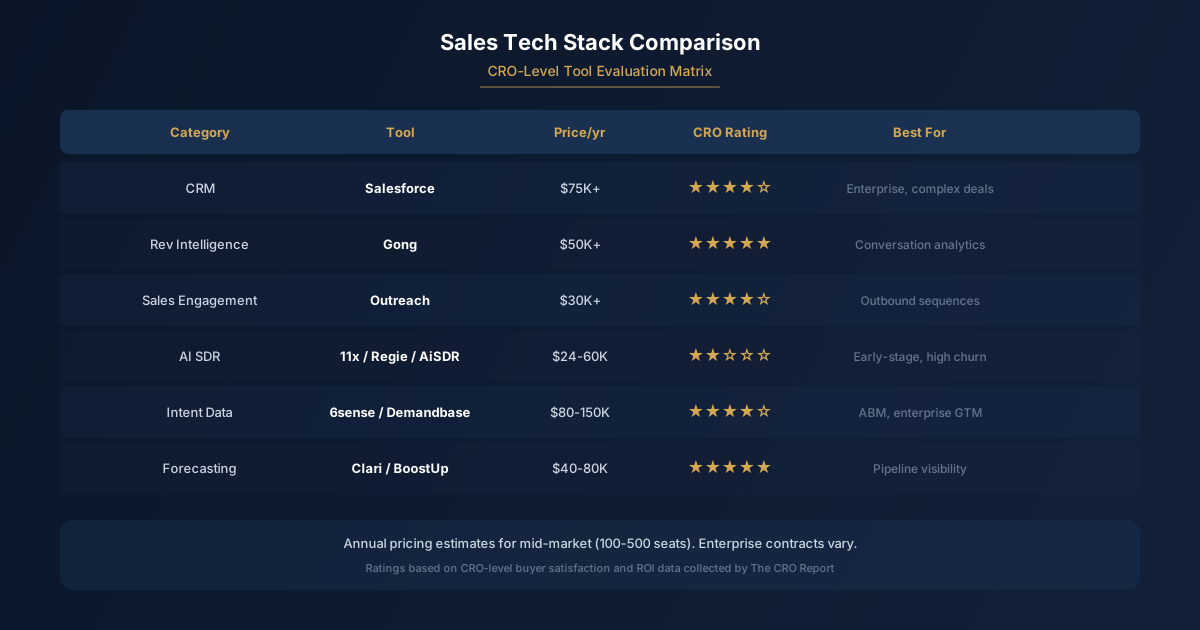
Neither platform publishes prices. Here's what teams actually pay.
Clari Pricing
Clari typically runs $60-100 per user per month for the core forecasting platform. The pricing depends on team size, which modules you include (forecasting only vs. revenue platform with conversation capture), and contract length. Enterprise deployments with the full platform suite run at the high end. Clari requires annual contracts and has a minimum seat count, typically 25-50 seats for enterprise pricing.
Gong Pricing
Gong is typically more expensive per seat: $100-200 per user per month depending on features and team size. Gong's pricing is volume-sensitive and drops meaningfully at 50+ seats. The platform also charges a platform fee on top of per-seat costs, which catches some buyers off guard. Like Clari, Gong requires annual contracts and custom quotes.
Combined Cost Reality
Teams running both Gong and Clari at 50 seats should budget $250,000-350,000 annually. That's a real number. The ROI math works when you consider that manual forecast overhead across VP Sales, RevOps, and CRO time can easily consume 10-15 hours per week at that team size, and a single missed call coaching intervention that costs a renewal can dwarf the annual software cost.
"We justified both platforms to the board by documenting what manual forecast prep actually cost in leadership time. Turns out we were spending 25 collective hours a week building forecast packages that Clari now generates automatically."
- VP Revenue Operations, Series D SaaS
Do They Integrate?
Yes, and the integration is real. Gong conversation data feeds into Clari's deal risk scoring, giving Clari more signal beyond just CRM activity patterns. A deal where prospects are engaging in calls but sentiment is trending negative shows up differently in Clari when conversation data is wired in vs. relying on CRM fields alone.
Both platforms have also been building into each other's territory. Clari has added conversation capture (Clari Copilot). Gong has added forecasting views. The overlap is genuine but neither has displaced the other at their primary use case. Clari's forecasting is still sharper. Gong's call intelligence is still deeper.
Teams that buy both get the most from wiring them together. Teams that buy only one should be clear about which problem they're solving and not expect the secondary platform to fill the gap adequately.
FAQ
What is the difference between Clari and Gong?
Clari is a revenue forecasting and pipeline inspection platform. Its core value is giving CROs accurate, AI-driven revenue predictions by analyzing CRM activity signals and deal engagement data. Gong is a conversation intelligence platform. Its core value is recording, transcribing, and analyzing sales calls to improve rep coaching and identify deal risks from what was actually said. Both are called "revenue intelligence" but they solve different problems.
Should I buy Clari or Gong first?
Buy Gong first if your primary problem is rep coaching and call quality. Buy Clari first if your primary problem is forecast accuracy and pipeline visibility at the board level. Most companies under $30M ARR benefit more from Gong because improving individual rep performance has more leverage than improving forecast accuracy at that scale. Clari earns its cost when you have enough pipeline complexity that manual forecast roll-ups consume significant management time.
How much does Clari cost compared to Gong?
Clari typically runs $60-100 per user per month. Gong typically runs $100-200 per user per month. Neither publishes pricing publicly. Gong is generally more expensive per seat, though both have significant negotiation room on multi-year contracts or large team deployments.
Do Clari and Gong integrate with each other?
Yes. Gong conversation data can feed into Clari's deal risk scoring. The integration is supported and used by teams running both platforms. Both have also been building features into each other's territory, but neither has replaced the other at their primary use case: Clari still leads on forecasting, Gong still leads on conversation intelligence.
Is Clari worth it for small teams?
Generally no, at least not before Gong. Clari's AI forecasting needs historical pipeline data to produce reliable signals. A team with 5 reps and 20 active deals doesn't generate enough data to make the AI meaningfully better than a well-maintained spreadsheet. Clari starts earning its cost when you have 25+ reps, multi-product pipelines, and enough deal volume that manual rollups become a genuine time tax on leadership.
Related Pages
Get Weekly Sales Intelligence
Tool reviews, pricing data, and market benchmarks for revenue leaders.
Subscribe Free